
A minute repeater is unusual because its most important feature cannot be judged properly from a photograph. A chronograph shows its function through pushers and subdials, while a perpetual calendar fills the dial with information. A repeater only reveals its real character when the mechanism is activated and the watch begins to strike the time.
That is what makes Audemars Piguet’s three new Supersonnerie watches worth more than a routine release note. For 2026, the manufacture has used the same chiming architecture in a titanium Royal Oak with a smoked green dial, a pink gold Royal Oak with a brown Grande Tapisserie dial, and a white gold Code 11.59 with a smoked sapphire dial. The mechanics are closely related, but the three watches feel very different once case material, dial construction and overall presentation are taken into account.
For readers of UK Watch Store, this release is a good example of why complicated watches need to be understood beyond their specifications. In the Supersonnerie, the case is not just a shell around the movement. It forms part of the acoustic system, which means the movement, soundboard and case construction all contribute to the way the watch is heard.
Why Supersonnerie is different
A traditional minute repeater uses hammers and gongs to sound the hours, quarter hours and minutes. The challenge is not simply producing those notes. A wristwatch case is small and enclosed, so vibrations can easily lose energy before they reach the outside.
Audemars Piguet developed Supersonnerie around that problem. Instead of fixing the gongs in the conventional way and relying on the movement plate to transmit sound, the system uses a separate acoustic element that acts as a soundboard. The idea is similar to a musical instrument: the vibration itself is only part of the sound, while the resonating surface helps give it greater presence.
This is what makes Audemars Piguet Supersonnerie acoustic technology more significant than another new dial or case colour. The system is designed to make the chime clearer and more audible without turning the watch into a larger or visually more complicated object.
The regulator has also been developed to reduce unwanted mechanical noise while the repeater is operating. On a watch where sound is the complication, background noise matters. The aim is not simply volume, but cleaner separation between the tones.
That distinction is important because sound quality cannot be established from press photographs or specifications alone. Construction can be explained, but tone and resonance still need to be heard in person. Any serious discussion of a Supersonnerie should make that limit clear rather than treating technical diagrams as proof of how the watch sounds on the wrist.
The titanium Royal Oak is the most restrained of the three. Its 42mm case is paired with a smoked green dial that uses a smoother satin-brushed treatment rather than the usual Grande Tapisserie pattern. The familiar octagonal bezel, exposed screws and integrated bracelet remain, but removing the traditional dial texture gives the watch a cleaner appearance.

That works particularly well with titanium. The cooler surface of the metal makes the watch feel more technical and less decorative, which suits a complication whose most interesting feature is hidden inside. The 42mm titanium Royal Oak Minute Repeater Supersonnerie still looks unmistakably like a Royal Oak, but the green gradient dial gives it a more contemporary character than the more traditional references in the collection.
The pink gold Royal Oak takes the same basic architecture in the opposite direction. Here, the brown Grande Tapisserie dial brings back one of the collection’s most recognisable details, while the warmer metal makes the contrast between brushed and polished surfaces much more obvious.
The result feels richer and more traditional than the titanium model. The watch does not try to disguise its position as a high-end complicated Royal Oak. The case, bracelet and dial all reinforce that impression before the repeater is even activated.

The difference between the two Royal Oaks shows why material matters beyond appearance. Titanium and pink gold change the weight, surface character and way light moves across the watch. Two references can share the same basic shape and still feel completely different because of the material around the movement.
The Code 11.59 adds another layer to the release. Its 41mm white gold case is paired with a smoked sapphire dial that reveals more of the movement underneath. Instead of relying on the strong visual identity of the Royal Oak bezel and bracelet, the Code 11.59 uses transparency and layered case construction to create its character.
The Code 11.59 Minute Repeater with smoked sapphire dial feels especially well suited to the complication because more of the mechanical structure remains visible without turning the watch into a fully openworked design. The grey alligator strap also separates it clearly from the integrated bracelet architecture of the Royal Oaks.
Seen together, the three watches make more sense as a group than they do individually. The titanium Royal Oak feels technical and restrained. The pink gold Royal Oak feels warmer and more traditional. The Code 11.59 puts greater emphasis on the movement itself. The complication is the same, but the design language around it changes the character of each watch.
The movement is only part of the story
All three watches use the manually wound Calibre 2953. The movement contains 362 components and offers a minimum power reserve of 72 hours. Those numbers underline the complexity involved, but they do not explain the watch on their own.
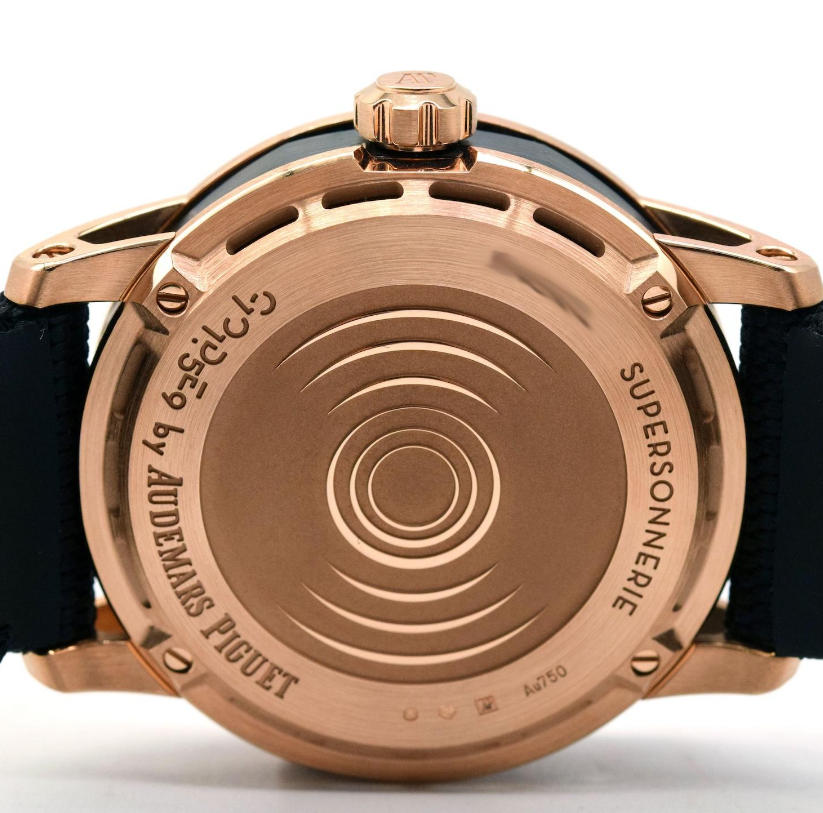
With Supersonnerie, the movement and case need to be considered together. The calibre controls the chiming sequence, while the acoustic construction determines how those vibrations are transmitted. That is why the Calibre 2953 hand wound minute repeater cannot be reduced to a power reserve figure or component count.
Manual winding also suits the nature of the watch. A repeater is already an intentionally interactive complication. The wearer chooses when to activate it, listens to the sequence and engages with the mechanism in a way that is very different from simply checking the date. Winding the watch by hand fits that slower, more deliberate experience.
This is also where comparisons with replica watches need to remain realistic. Readers looking through Audemars Piguet replica watches may find Royal Oak or Code 11.59 designs that reproduce some visible elements of these references, but appearance tells only part of the story.
A replica may copy the Royal Oak bezel, integrated bracelet, green or brown dial, or the smoked look of the Code 11.59. Those details can be assessed visually. The Supersonnerie system is different. Its performance depends on the relationship between the movement, hammers, gongs, regulator, soundboard and case.
For the titanium Royal Oak, the most useful visual checks are the case proportions, bezel shape, bracelet taper and the way the green dial darkens towards the edge. On the pink gold version, dial texture and the transitions between brushed and polished surfaces become more important. On the Code 11.59, the proportions of the case, lugs and curved crystal play a larger role because the design is built from more visible layers.
This is why accurate Royal Oak Supersonnerie case proportions are useful for visual comparison, but they should never be treated as evidence of mechanical accuracy. A watch can look convincing from the front while using a completely different movement and case construction underneath.
The same applies to any working chime. Producing a sound when a slide is activated does not mean the mechanism follows the same construction as the original. Supersonnerie is defined by how the entire acoustic system works together, not simply by the presence of a repeater-like function.
That difference between appearance and mechanism is what gives these three watches more depth than a typical colour update. Their dials and materials make them easy to distinguish, but the technology that connects them is largely hidden.
For that reason, the difference between an original Supersonnerie and a replica interpretation goes far beyond dial colour, case metal or bracelet finishing. The exterior can be compared through photographs. The defining acoustic performance of the original cannot.
Audemars Piguet has effectively used one complicated movement to create three very different watches. The titanium Royal Oak keeps the design cool and relatively understated. The pink gold Royal Oak leans into the familiar luxury character of the collection. The Code 11.59 exposes more of the mechanical structure and gives the complication a different visual setting.
What links them is not the case shape or the dial treatment. It is the way Audemars Piguet has built sound into the architecture of the watch. That is the part of this 2026 release that matters most, and the reason these three references deserve more than a quick specification summary.
Editorial note: Technical specifications in this article refer to authentic Audemars Piguet Minute Repeater Supersonnerie watches. Replica and third party interpretations may differ in movement, case material, dial construction and acoustic mechanism.


