As you can probably imagine, having long-winded, in-depth discussions about the replica watches UK industry, brand theory, and product particulars consumes a lot of our free time here at Fratello. But that’s not to say we don’t love it. Quite the contrary! Our passion for these nuanced chats paints a clear picture: we’re mad about simply everything to do with our hobby. One such conversation gave rise to this article, so I thought I’d share with you my thoughts on the current state of play at Rolex and what that might mean for the brand, its consumers, and the industry en masse in the future.
“Rolex is no longer a watch brand,” I said nonchalantly. I’ve been saying it for a couple of years and I often deliver this message with an air of import before scurrying off somewhere to hide from the inevitable follow-up questions. I’m not afraid of answering those follow-ups, but I do need to put aside a big chunk of my day to do so because when you open a can of worms this big, you’d better be prepared for what comes next. This time, however, I indulged myself:
“It’s something else. It’s bigger than pretty much all the other brands combined in the minds of anyone outside of the industry. For years, now (roughly a decade, I would say), the desire to own a Rolex has been largely separate from the design to own perfect copy Rolex watches. The brand is a symbol. It is status in a physical product (whatever that means). Trying to follow the Rolex blueprint is impossible on the same scale, for one very obvious reason: heritage. However, to think that no brand does what Rolex is doing on a micro-scale wouldn’t be entirely correct…”
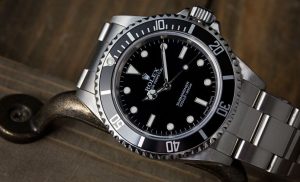
Let’s address the first point: Rolex has an esteemed history. It has been on the right side of innovations through its 116-year existence. The brand’s prestige is so powerful that, nowadays, it is often credited with inventing all manner of things it simply popularised. Was the Rolex Oyster case the first water-resistant housing? No, it was not. Was the Oyster Perpetual the first automatic wristwatch? Nope. Was the Datejust the first watch to use a cyclops? History suggests otherwise. But that same history has been rewritten by the victors, by the brand that survived, by the intelligent marketers that were true innovators when it came to advertising.
Rolex makes fantastic watches. Anyone who knows anything about watches knows that. That doesn’t mean you have to like them all, but any kind of Rolex bashing that doesn’t acknowledge that fact is pointless noise you can immediately discount. Better (relatively speaking), however, than the best fake Rolex watches themselves is the way in which the brand has promoted them. Honestly, when you break down the material differentiation of Rolex watches and those of its peers (going all the way back to 1905), there is far less of a gap than there is when comparing Rolex’s marketing strategies with those regarded as competent in their day.
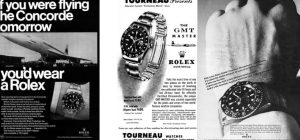
Without a doubt, the brand of Rolex is its strongest suit. And as much as the uninitiated might think that kind of thing can be created overnight or replicated ad nauseam, it cannot. No amount of money or copy-cat marketing can get you what Rolex earned. You might not like what the brand has become, but its power and scope are undeniable, and it attained both through simple and clever product positioning.
To the second point: how are brands emulating Rolex? On the surface, I suppose it looks like no brand out there is doing anything like Rolex with its strictly controlled supply chain. But that isn’t true at all. Pretty much every limited edition release is feeding on the same kind of emotions created by manufactured scarcity. What’s weird about Rolex is that their unlimited swiss replica Rolex watches are effectively limited.
The key to success is accurately estimating demand, to come close to (but never exceeding) market penetration. While it is frustrating for customers, no brand wants to sell 100% of the products it could sell. To stoke the hype around the brand, it is better to sell 70, or 80%, perhaps. It’s a fine balance to strike as you doubt want more disgruntled would-be buyers than satisfied buyers, but you also don’t want to create too many pieces and risk diluting each piece’s perceived value.
And so if a brand thinks it could sell 100 pieces, perhaps it makes 75, sells out speedily, and then leverages the resulting desire for more to buoy its next release. No brand is better at perpetuating the cycle of hype than Rolex. Rolex makes close to a million high quality fake Rolex watches a year despite almost certainly being able to sell double or triple that amount. But why would the brand want to do that? Once everyone has a Rolex, no one wants a Rolex. It’s essential to control the hoards of would-be luxury commodity purchasers otherwise a brand’s cachet can evaporate very quickly indeed. Another way Rolex does this is by controlling the gray market prices of its products…
I don’t believe there is a shortcut to this kind of success or any realistic way to emulate this business watch on a mass scale. Lots of things can be taken from it, however. Other big brands are experimenting with different modes of supply (take the “Limited production” Ed White and Snoopy III for example) to see what benefits they hold, but none of them can do what Rolex can because its strategy is not a “drag and drop” option. Rolex is Rolex because it is Rolex. It isn’t a watch brand; it’s a phenomenon. And for some deeply disturbing reason, despite knowing all this, I still want one. And perhaps, just possibly, you do too…